Speech therapy
Restore comprehension, expression, articulation, and safe swallowing so patients can reconnect with family and community.

What is speech and language therapy?
Speech and language therapy is a rehabilitation specialty that assesses and treats disorders related to communication, language, voice, speech, and swallowing.
Communication is the foundation of human connection. Timely intervention helps patients regain their voice and confidence.
At HandsViet, each patient is individually assessed for language comprehension, expression, articulation, breath support, and swallowing safety.
Treatment goes beyond speaking more clearly. We aim for meaningful communication in family life, work, school, and real social settings.
Goals of speech and language therapy
Treatment aims to help patients communicate as effectively as possible while keeping eating and drinking safe and preventing aspiration-related respiratory complications.
Restore the ability to understand and express ideas through speech, writing, or alternative methods.
Adjust swallowing skills and eating habits to reduce choking and aspiration pneumonia risk.
Build confidence for conversation, learning, work, and maintaining relationships.
In clinical practice, we focus on these concrete goals:
- Clearer articulation: Adjust lip, tongue, jaw, and airflow patterns so speech becomes easier to understand.
- Language restoration: Train comprehension, word retrieval, sentence building, and functional communication for patients with aphasia.
- Airway protection during swallowing: Teach posture, swallowing strategies, and food texture modification for safer eating and drinking.


Who should receive speech therapy?
Speech therapy is indicated for adults and children with communication or swallowing difficulties caused by neurological, developmental, structural, or functional issues.
Adults with neurological conditions
After stroke, traumatic brain injury, Parkinson's disease, or dementia when aphasia, dysarthria, or swallowing disorders are present.
Pediatric cases
Children with delayed speech, articulation disorders, stuttering, autism, or difficulty understanding and using language.
Swallowing disorders
Patients with coughing during meals, choking, prolonged eating time, or aspiration risk need early assessment and intervention.
Speech therapy methods
HandsViet uses modern intervention strategies based on clinical findings and each patient's specific goals.
-
1Articulation therapy
Train lip, tongue, jaw, and airflow placement to correct difficult sounds or unclear speech.
-
2Language intervention
Use naming tasks, comprehension work, sentence building, and functional communication in real-life scenarios.
-
3Dysphagia management
Train oral and pharyngeal muscles, teach swallowing posture, and modify food textures to keep swallowing safe.


When should therapy begin?
The earlier therapy begins, the better the chance of restoring communication and safe swallowing. Prolonged delay often makes these disorders more fixed and harder to change.
Golden period
After stroke or brain injury, the first months are when the brain adapts most strongly. This is the optimal period to rehabilitate language, speech, and swallowing.
For children, early assessment is essential as soon as parents notice delayed speech, limited interaction, or age-inappropriate articulation.
Speech therapy at HandsViet
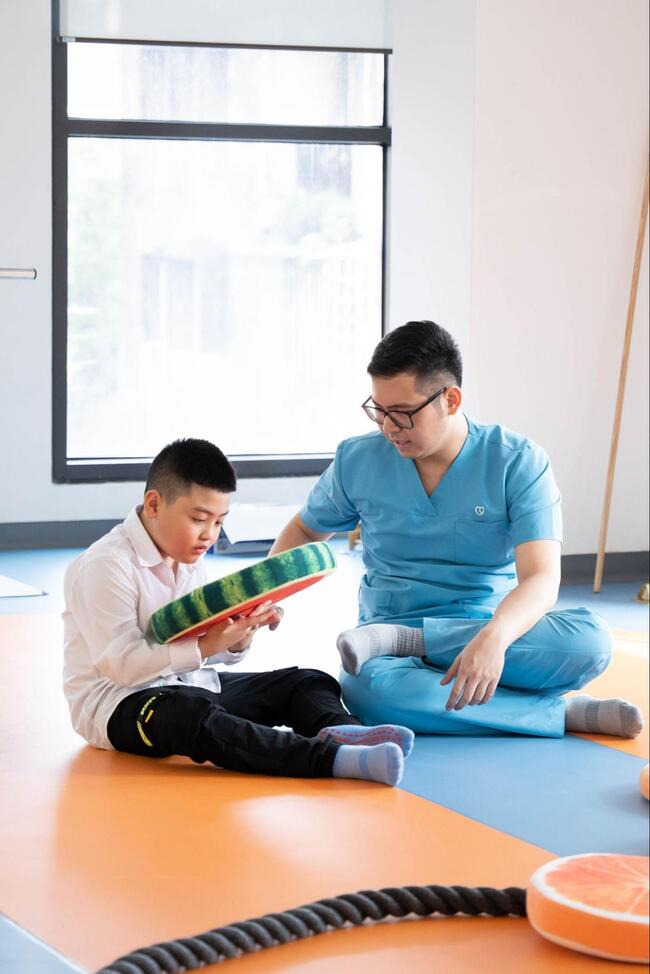
HandsViet provides a calm, friendly treatment setting with the assessment tools needed to create a personalized intervention plan with clear goals and measurable progress.
We listen even to what patients cannot yet say, then rebuild communication step by step.
Start rebuilding your voice
If you or a family member are having trouble speaking, understanding language, or swallowing, start with an early assessment so valuable recovery time is not lost.